Skills
Expertise: Cell and molecular biology techniques: Cell culture, PBMC, Monocytes
separation, Macrophages differentiation. B & T cells separation and CAR- T cells, DNA &
RNA Isolation, Cloning, Transfections, Cell proliferation assays, PCR, Electroporation, Viral
transduction, Real time PCR, qRT-PCR, Dual Luciferase Assay, Western blot, siRNA
knockdown & CRISPR Cas9 system, Site Directed Mutagenesis, EMSA, Matri-gel invasion
& cell migration assay, Chip and Tissue ChIP, Chorioallantoic membrane Assay (CAM),
Micro-dissection, Immuno-histochemistry (Giemsa, Benzidine, miR-Insitu- hybridization)
and Confocal LSM 800 Microscopy, FACS, Comet Assay, Piperidine Assay and ELISA.
NGS Techniques: Sanger Sequence, Pyro-sequence, RNA sequence-Hiseq, Amplicon
sequence-MiSeq, Hi-Plex sequence, begun to learn CUT&RUN, and chromosome
conformation capture sequencing methods- [Hi-C service/4C-sequence]
Computational and bioinformatics skills: Drive data analysis through R and Python
languages scripts by using AI tools including single cell sequence and analysis. Mult-omics
Analysis. Bench link, Sequence retrieval, Sequence alignment, Deletion constructs, and
Primer designing, GEO datasets analysis, Gene Set Enrichment Analysis (GSEA), Epi -
genomic databases, Non-coding RNA tools, UCSC, Transfac, Site-directed mutagenesis
tools, ENCODE, Mutational variation databases, GraphPad, Prism, BioRender,
ENDNOTE, Proficient in Word Processing and Comfortable in both Windows and Linux
environment.
Animal Handling: Maintenance, Breeding and Performed vivo experiments for NSG mice.
About
Dear Professor,
Good morning. It's a great pleasure to meet you and all your lab colleagues, My
Name is Dr.Jonah, Born in India, Studied my graduates at Islamiah college, Madras
University and PhD at Heidelberg University. I just completed my postdoctoral
research on 06-01-2026 at University of Trento, Italy. Here, I was working under
PNRR project entitled that ""Unraveling the Molecular and Immunologic
Mechanisms of Intrahost Persistence in Emerging and ReEmerging
Arboviral Infections", Hence i was cloned and characterising the Serinc5 gene
promoter to understand the Transcriptional regulation of Serinc5 gene expression
in humans while infected with viruses in the group of Prof.Massimo Pizzato
[manuscript will be get ready in 1.3 years] and attended BSL3 facility usage
demonstration. Last year, I worked as a postdoctoral researcher under PRIN
project " entitled that "Dynamics of the Immune Response to SARS-CoV-2
Infection: Regulatory Mechanisms and Their Relevance to COVID-19" in
the group of Prof. Massimo Locati at the Department of Medical Biotechnology and
Translational Medicine, Università degli Studi di Milano. Here I was trying to find
the Role of Non-coding RNAs such as miR-155, miR-135a/b, miR-6503-5p/3p on
MS4A4A gene regulation on macrophage plasticity. [Soon we will complete this
project]. Alongside, I have been collaborating with Prof. Camillo Di Giulio lab, “To
study the Role of Hypoxia on Chemodectoma models, Department of Neuroscience
& imaging, at G. d' Annunzio University, chieti and also with other Italian
universities faculties. From 2020-2022, I worked as a post-doctoral researcher at
G. d' Annunzio University, Chieti, Italy. Here, I collaborated with Onco-hematology
department to study the role of miR-181a and miR-181b in B-cell
malignancies and development of rational approaches for their use as
therapeutic agents, which includes these CD19-miRNAs encapsulated
Nanoparticles in NSG mice CLL models, Established protocol for MiR-Insitu-
Hybridization, Prepared Protocol for Richter syndrome organoid and
performed Lentiviral production in BSL2 facilities. subsequently, I had
collaboration with Prof.Elizabetha Janda, University of Catanzaro, Italy for
Parkinson Disease Project, in that I contributed for paper entitled that
"Autophagy and neuroprotection in astrocytes exposed to 6-
hydroxydopamine is negatively regulated by NQO2: relevance to
Parkinson's disease" Nature Scientific Reports on December 7 2023.
During my second postdoctoral research, I discovered after Over expression of
Mir-21-5p Induces Apoptosis and Cell Cycle Arrest By Down-Regulating
SKP2 and Overcomes Bortezomib Resistance in Multiple Myeloma, and
collaborate with other projects such as Downregulation of MDM2 Leads to Anti-
Proliferative Effects through Activation of p53- Associated Pathway Mediated By
Both Dual Inhibitor MX69 and Mir-548c-3p in Multiple Myeloma" [ please find
abstracts in my link] and Dysregulation of SMAD1/Mir-205 Axis Contributes to
Drug Resistance in Multiple Myeloma Project, and Comprehensive Single-Cell
Sequencing Sheds Light on Skp2 Inhibition's Influence on Cell Survival in Multiple
Myeloma [abstract attached] at Toronto General Hospital, Toronto, Canada. At my
first post- doctoral research, I discovered the 50% VAF of Arid1a gene mutation
in AML relapse and studied the Arid1a haplo-insufficiency in AML cell lines
and FLT3-NPM1 positive AML samples. Consequently, I prepared samples for
the ChIP sequence to "Identify the functional role of the Cohesin-CTCF complex in
both RAD21 WT and RAD21 mutated AML cell lines" with our Lund University
collaborator. During this period, I gained knowledge of the CRISPR/cas9 genome
editing system, which is conducted by Linkoping University. In 2011, I collaborated
to study the Epigenetic regulation of miRNA genes and post transcriptional
regulation of epigenetic markers in normal hematopoiesis and Myeloproliferative
neoplasms at the Faculty of Medicine, Latina, La Sapienza, University of Rome. In
this project, I identified that valproic acid regulates JAK2V617F expression
through bivalent domains and alters myeloid differentiation in MPN.
During my graduate project work I underwent training to screen and diagnosis
of Sickle cell anemia and thalassemia patient samples” and in 2018, I did
FACS training course under the supervision of Prof. S.V Shaji, Stem Cell
Research Center, Christian Medical College, Vellore, India. In addition, I
have been collaborating with two faculties: 1. Prof. Subbiah Ramasamy to study
the role of miRNAs in the cardiac-hypertrophy model; and 2. Prof. Subhradip
Karmakar-TET2 gene function in AML.
After my master’s degree I worked as a Research Assistant on the project
entitled “Technological feasibility and immunological potential of
multivalent microsphere vaccines incorporating Diphtheria, Tetanus, and
Hepatitis B Antigen. He involved in cloning, over expression and
characterization of Filamentous Hemagglutinin (FHA) and Pertussis Toxin
(PT), proteins from Bordetella Pertusis”, in Prof. D.N Rao Lab, at Biochemistry
department, AIIMS,New Delhi. my next research assistant project was entitled
that “Molecular mechanism and dynamics studies of mononucleosome by
Resonance Raman Spectroscopy and Interference of 2-Amino Purine
Fluorescence in Calf Thymus DNA by using UV resonance Raman
spectroscopic Method” in Prof. Mrinalini Puranik Lab, Department of
Biochemistry, Biophysics & Bioinformatics, National Center for Biological
Sciences, TIFR, Bangalore, India. Since, I found your research area got me
inspired and therefore, I am interested in applying to the above mentioned
position.
Herewith, I have attached my CV and other documents for your perusal. If you
need any further requirements, please contact me at any time...
Thanking you,
Kind regards,
Dr. Jonahunnatha Nesson George William, PhD.
Recercatore [postdoctoral researcher]
Via gocciadoro 4,
Trento, Italy 38122
Mobile: +39-3292865313
Skype ID: jonahnesson
Research gate: https://www.researchgate.net/profile/George-William-Jn-Jn
LinkedIn: https://www.linkedin.com/in/jonahunnatha-nesson-george-william-
65a46617a/
Google
scholor: https://scholar.google.com/citations?user=2RqzdysAAAAJ&hl=it&oi=aoa
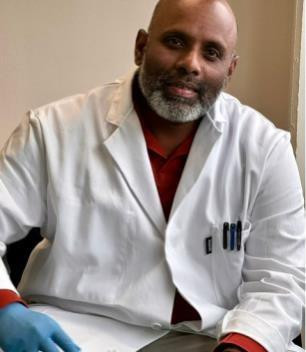
Profile Photo
